
The rats in Rahman’s ceiling have a certain music to them—a haunting melody that can’t be mistaken. In the morning, it’s a lilting la-dee-da; by night, a muffled dee-dum, dee-dum. Their shrieks swell and sink like waves, rising in eerie harmony to merge with the clatter of his apartment—or else dissolve beneath it—before fading into darkness, swallowed by the deepening hush.
Rahman swears they could start a band. He insists they’ve got the talent for it. The notes they hit? Astronomical, he claims—soaring far beyond his own range, even in his wildest daydreams. He pictures himself holding their tiny hands—or paws!—and leading them into the spotlight, where they, like The Fugees or Destiny’s Child, would carve their names into the fabric of this crumbling, joy-starved world. He would be their anchor, the Brian Epstein to their Beatles, the mastermind behind their emergence.
His girlfriend, Nsonma, lets out a soft chuckle that deems him foolish. “These are rats you’re talking about… rats.”
“Ehen, so? Can’t you hear them? Isn’t this just the most unusual thing?”
Like all his ridiculous ideas and inventions, he pitches this one right after sex, when their limbs are tangled together in a lazy sprawl. Her left leg rests on his right, her right arm draped across his chest, fingers reaching for his. From the ceiling, if the rats happened to peek, they’d look beautifully enmeshed.
She chuckles again and threads her fingers through his. “I mean, I do hear them. But can’t you hear yourself? Doesn’t this sound like another ‘edible lube’ idea?”
“Honey, honey, honey,” he says, as if repetition might erase the memory that edible lube was, in fact, a horrible—and frankly, disgusting—idea.
It had come to him mid-coitus while he was eating her ass on a particularly cold night. At the time they were in an experimental phase, open to almost anything. The rats, too, seemed to be conducting an experiment of their own in the ceiling. They held what sounded like a night vigil above them, squealing and thudding, their racket almost like clapping, perhaps. Rahman had nowhere else to be, so why not? He stooped low, low enough for the tip of his nose to brush her tailbone, then dove in as though it were a meal he had been starved of all his life. And maybe he would have enjoyed it more if he had not been constantly reminded, by the unmistakable taste, that lube was involved.
Now, he laughs again, brushes a thick braid from her face, and calls her “honey” once more. There’s a beat of silence, as if he’s trying to convince himself edible lube wasn’t such a terrible idea after all. But no matter how piquant he intended it to be, it was. It really was.
“Honey,” he says, “do you know how iconic it’d be if I actually pulled this off? You think Alvin and the Chipmunks was a hit? Wait till you witness Rahman and his rodents.”
At this juncture, Nsonma let go of Rahman and burst into laughter, the sort that chokes you. It takes her by surprise, yanks her off the bed and sends her to the floor, where she gasps and laughs until she begins to hiccup. By the time she climbs back onto the bed, breasts as perky as ever to Rahman’s hungry eyes, her stomach aches from the force of it.
He stares at her. Really stares at her. Past her clear skin, past the lush curtain of thick lashes, straight into her tear-glazed eyes, as though trying to discern what exactly is so hilarious about this particular idea of his.
And she watches him in return, a sharp pang of hunger—or ulcer, or both—stabbing at her stomach, drilling its way to her spine. She can’t tell if the stillness of his smile means he is truly serious about this, and if so, whether she has wounded him with her laughter. Whether he is quietly nursing disappointment.
Above them, the rats watch with judgment, with a gnawing envy. Fornicators, privileged with clothes but choosing to remain naked. Sinners beneath a sturdy roof, who can roam the world freely, yet are always here, and half the time tangled in this bed, doing only God knows what. So when Rahman and Nsonma finally, finally decide to dress and step out—so he can, as the man, escort her to the junction where she’ll catch a bus home—the rats seize their chance and burst forth. And for a moment, briefer than a sneeze, Rahman’s home belongs to them.
*
Like all hardworking men with two jobs, Rahman is rarely ever home. And even when he is, unless Nsonma is around, it hardly makes a difference—he is still absent in all the ways that matter. He has a habit of keeping himself perpetually occupied. If he isn’t tapping away at his laptop or pacing the room mid-call, voice hushed and urgent, he is threading a needle to mend a torn shirt, frantically searching for a misplaced one, crouching over the sink trying to unclog it, or wobbling atop a rickety stool to change a faulty bulb.
But the rats, if ever summoned to testify, will scoff at this narrative.
To them, aside from his predictable day job as a school bus driver for Jameson College, Rahman doesn’t have much else going on. His day begins with the rising sun—after a bout of twisting, stretching, and yawning—before he rolls off his flat yet surprisingly forgiving mattress, as though burdened by the sheer weight of his existence. He would brush his teeth while muttering a prayer, the two acts somehow synchronised in a rhythm only he understands. The rats don’t quite know how that works, but they’ve come to trust Rahman’s uncanny ability to make sense of the senseless.
After brushing, he bathes, scrubbing himself with unrelenting fervor—his arms, his bare chest, his thighs, the shadowed crevice between his buttocks—until he reaches his groin. At that point, he often pauses to contemplate, depending on the time left on the clock or whatever thoughts drift through his head, whether or not to pleasure himself. Sometimes—well, once—the urge had gripped him with such force, the erection so unforgiving, that he’d thrown caution to the wind. He stroked and stroked, pinched the tip when the release crested, then continued edging, refusing to let go until that slight feminine moan escaped his lips, and his body trembled with surrender.
That morning, he’d received a very stern reprimand from the vice principal beneath the sweltering sun. He thought he’d gotten away with it, until his salary came in five days late, sliced by a deduction so brutal it made him reconsider not just the novel he’d planned to buy Nsonma for her birthday, but the entire job itself, one that gave so little and demanded so much.
It was during his evening job that he first saw her. He worked the doors at Leosky Supermarket on Okigwe Street, stationed there to inspect customer receipts, ensuring each item matched what lay inside their nylon bags. He had performed the task dutifully since the day he got hired. But lately—and not because of how Nsonma’s beauty distracts him, but due to a creeping fatigue that comes from repeating the same mechanical task day after day—he has begun to slack off. Now, he merely squiggles across the receipts and tears a corner, barely looking.
But when he was still new, from where he sat, he would lock eyes with Nsonma at the checkout counter, his gaze scribbling invisible letters across the air, telling her all the things he longed to give, if only she’d give him a chance. Their wordless exchange irritated the guy who manned the pharmacy entrance wedged between them. Unluckily for him, he stood right in their line of sight and couldn’t help but catch glimpses of whatever spell it was they thought they were casting. They even held up queues with their stolen glances.
Once—this was after she had finally agreed to go on a date with him—a customer snapped at her.
“I told you I wanted that returned, yet you still added it to my bill. What’s got you so distracted? Or are you retarded?”
It was the R-word that jolted him upright, his reflexes sharper than The Flash’s. He wasn’t sure if he’d ever moved that quickly in his life. He was the kind of man who approached things slowly, with a carefulness that could easily be mistaken for cowardice. Yet now, despite the woman’s “Americanah” accent, irritated, and laced with an Abakaliki inflection, he found himself on edge. She looked like someone with connections, the kind who could make life difficult for someone like him with just a phone call. He wasn’t sure he wanted that kind of trouble. But still, he couldn’t stand by and watch.
“Ma’am, is there a problem here?” he asked, adjusting the neckline of his Arsenal jersey— collarless, faded, slightly torn as if bitten into. He looked the woman directly in the eyes, then flicked a brief, empathic glance at Nsonma while the woman ranted. When she was done, he replied, calm and soft-spoken, “I’m sure it’s all just a misunderstanding, ma. Please, let me help you bag your groceries.”
He had never used the word groceries before—at least not in the context he used it then—but everything about his delivery seemed to pacify her: his gentle tone, the politeness of his language, the warmth in his smile, the speed and care with which he packed her items. She said nothing more about the shredded cheese as he wheeled her cart outside and helped her load the bags into the boot of her car. She simply mumbled a thank you and slipped behind the wheel.
Believe it or not, a week or two passed. She forgot about the whole thing—the exchange, the pizza, the pasta, even the salad Rahman had sworn she could conjure from the cheese she’d made a fuss over. And so, when night fell, the many, many rats nesting in her vast ceiling would have something rich and mouldy to feast on.
He looks into the mirror today, mid-prayer, the minty froth of toothpaste foaming at his lips like a beard blooming in the wrong places. It isn’t part of his routine to do this; he usually brushes in the bathroom, so one thing naturally leads to the other, and by the time he’s stepping out, he’s already bathed. But today—and he can’t quite place what’s so peculiar about it, though the feeling clings to him—he leaves the toothbrush dangling in his mouth, studies his bare body from head to toe, and decides, finally, to start taking his ideas seriously.
He doesn’t need a shrink or some glossy self-help book to tell him he lacks self-belief—he knows it, has lived it: the unfortunate echo of what others thought of him, especially his family. And so, despite years and years of swearing he’ll prove them wrong, that he’ll blow and move out of this self-contained room built for undergraduates at the Federal University of Technology into a modest flat with a separate bedroom and parlour, despite saying he’ll marry someone—anyone—he remains, at thirty-one, working two dead-end jobs that barely bring in a combined one hundred and sixty thousand naira a month, still catching shuttles, still selling footwear—a business he started back in school, one he’s almost lost all passion for, certain back then it would have launched him by now.
So this slow, slow morning, he spits into the basin, gargles his mouth with water, and for a moment, listens for any movement in his ceiling. He’s met with silence.
*
There’s no one at his workplace who thinks on the same wavelength as he does—no one to confide in about his ingenious idea. This, more than anything, is what weighs on Rahman’s mind as the shuttle driver barrels down the road, talking about how clear and void of traffic it’s been everywhere since the governor ordered homeless people to be bulldozed from the streets, ahead of the foreign delegates’ visit.
“You no see say all those old old houses for Owalla Community don vanish? Since 2025 sef!” the driver says, clearing his throat. He speaks not because he expects a response, but because the words are piling up in him, demanding release. “And the thing be say—nobody dey even ask where dem dey go. But you dey enjoy the free road, dey nod your head as you come back from work, dey look that MLK Jr. statue for rec centre. Person wey don die before Imo State even become state.”
Rahman can barely make out the words—what with the wind tearing through the open windows, wild and insistent, vying for attention like a jealous sibling. But from the fragments he catches, little as they may be, he perceives a truth. One that dawns on him gradually, like something that has always lingered in the background but stays invisible, as privilege is a transparent blindfold shielding you from needing to notice. Even now, as he tries to picture it—their demolished homes, their scattered lives—it doesn’t quite pierce him. The discomfort brushes against him, yes, but never settles in his bones.
The driver drops him directly at the school gate, a kindness Rahman doesn’t acknowledge. It’s simply his nature: to be indifferent, even curt, with people he doesn’t need anything from. When his footwear business had been in its pilot stage, he’d managed to unlearn this habit. He’d engage in banter at the viewing centres, laugh at strangers’ jokes in public transports, and even sigh “This country sef” while queued up at the bank or ATM, but sighing loudly enough for the next person to respond, “My brother oh” and they would each chip in something disheartening about Nigeria: the relentless spike in commodity prices, the bloodshed in Damaturu, or, like today, the swelling numbers of homeless people in the cities and the government’s criminal indifference to it all. But all the while his eyes would be glued, not to the person’s face, but their feet, varied options of footwear he could pitch to them, swirling behind his eyelids, as though it were a mouth-watering menu at Chicken Republic.
It’s 6:45 a.m.— early enough that the compound, cloaked in silence, feels deserted. The sky, though already aglow with morning light, is streaked with wisps of grey, like tufts of cotton candy beginning to rot. He’s never been one to predict the weather just by reading the clouds or feeling the wind on his skin; those things have always seemed like magic to him—distant, imprecise, some Now You See Me shit. But he’s about sixty-five percent sure it’s going to rain. He just heard a faint rumble. What else could that possibly mean?
Without waiting to find out, he hurries into one of the empty classrooms to take shelter.
Inside, the rumbling deepens. It’s louder now, like the growl of a generator, but rawer, more primal, carrying that spectral resonance only natural, ominous things possess.
He looks straight at a whiteboard. Scribbled across it are lines that resemble snakes or earthworms—lazy, looping scrawls left behind by some bored teacher’s hand, he assumes. But he doesn’t look away. For some strange, inexplicable reason, one he doesn’t bother to interrogate, it soothes him. And in that pregnant silence, the kind thick with thoughts and brimming with revelation, he hears a sudden, chaotic scurrying. Up the walls, then into the ceiling.
“Ugh, rats,” he curses, a cold shiver zipping down his spine. Suddenly, he’s repulsed by how filthy Owerri has become, how ripe it is for infestation by these grotesque, hairy creatures. At nearly every junction, waste spills from overstuffed bins onto the streets. The drainages brim with stagnant water and congealed muck—some black, some sickly green—all perfect breeding grounds for vermin.
Years ago, it had mostly been Lagos that suffered this plague, but now it seems every state—even the FCT, some say—is drowning in trash and rot. He wonders how much worse it’s gotten in Lagos; if rats now live in wardrobes, staring down the rightful owners when they reach for their clothes. Perhaps the ones that have grown toddler-sized even hand the clothes over, saving you the awkwardness of having to decide what to do when confronted by a rodent in your closet. Because no matter how many times it happens, no matter how often you see them, that moment can never stop being awkward.
He settles into the nearest seat, sliding his long legs beneath the desk, so his thighs, anchored by his knees, lift it slightly off the floor. A wave of nostalgia tugs him back to his primary school days in Ebonyi State, where the desks, like this one, were made of wood, but unlike these, retained their earthy brown hue. He remembers suggesting they be painted once, during a math lesson, turning to his class teacher and saying it would make the room more colourful. He’d simply needed a break from the numbers. She was a woman he still recalls in vivid detail: a large mole on her cheek, wiry tufts of beard on her chin, and two protruding front teeth that gave her the likeness of a rodent. She had repeated his suggestion to the class as though it were the setup to a joke with no punchline, stripping it of all sincerity, all potential. And the class had laughed, long and hard, even after he’d slumped back into his seat.
The memory steers his thoughts to last night’s incident with Nsonma. And though he aches to call her, even knowing she might not be awake this early, he doesn’t bother. He reaches for his phone in his pocket, allows his finger to roam over her name in his call log, but doesn’t dial.
Then comes a sound: like a scurry, but shorter, quicker, more erratic. It snaps him back into the present. His ears perk up. He doesn’t know why, but he holds his breath and listens closely. It’s coming from the teacher’s desk at the top-right corner of the classroom.
The desk rattles and stills, rattles and stills. An off-beat dance that freaks him the fuck out. He’s seen enough horror movies— those with murderous dolls, cursed houses, and possessed objects— to know better than to go poking around. So, he stays frozen. Taps his fingernails nervously against the wood of the desk, trying to calm the storm brewing in his chest.
He hums—a pitiful, rhythmless sound—in a vain attempt to drown out the rattling. But now, whatever is by the desk knows it isn’t alone. The rattling picks up and accompanying it is a nibbling and a shoving and a rustling, alien sounds he knows he’ll struggle to put into words when recounting this to Nsonma later.
He can already hear her mocking him, can see the amused disbelief stretching across her face. She’d call him ridiculous,a coward. After all, he’s seen her crush cockroaches and wall geckos beneath the bare heel of her foot, pressing down until their innards burst and their bodies smeared onto the floor like spilled ink. She’d told him once, when he complained about the rats in his ceiling gnawing through his socks and devouring his food whole, leaving only scraps of fabric or, in the case of the food, the deflated nylon wrappers, that her father used to set traps, then set fire to the rats. Their screams, she said, sounded almost human as they mingled with the crackle of flames and rose to fill the compound like a sorrowful hymn.
He shakes off the echo of her voice and rises to his feet. Like a man. His steps are slow, deliberate. If you saw him, you’d think he’d just been healed by a sweat-drenched, anointing-spitting pastor, who’d yanked him from years of paralysis and returned motion to his legs with “Holy Ghost Fire!” They don’t wobble, these legs, but he feels their nerves tightening or loosening. Something is off, yes, though he can’t yet name it.
“Shoo!” he shouts—at the desk, at the shadow behind it, at the figure that seems to rise, expand, grow larger with each passing second. “Omo, if I catch you, I go wound you oh!”
His voice cracks before he finishes the threat, but that’s what he means to say. He looks pathetic. In his mind’s eye, he sees his own spirit outside his body, watching this humiliating scene unfold, its face contorted in raw, unflinching shame.
“This is ridiculous,” he mutters, barely audibly. “What’s the worst that could happen?” And so, he charges forward.
He nudges the desk, softly, almost half-heartedly. Still, it tips over: pencils, markers, notebooks, rolls of cello tape, a stapler, a fat dictionary, all clattering noisily to the floor. And then the figure—naked, hairy—abruptly straightens from the trash can it had been rummaging through. It stands on two legs, now at eye-level with Rahman, and stares at him. For a moment that stretches out into what feels like an apocalyptic eternity, it doesn’t move.
Rahman’s legs go numb. He doesn’t feel the warmth of the urine trickling down them, but he watches—keenly, helplessly—as the creature leaps onto the wall. With uncanny agility, it climbs, using the window blinds as leverage, until it reaches the ceiling.
It has no tail. Its legs don’t bow outward like a kangaroo’s. The soles of its feet are blackened, but only as though they haven’t been scrubbed in months. A rancid smell follows it— not rodent musk, but sweat, grime, something human and unwashed, something closer to himself than he dares to admit.
He catches a glimpse of its face, of lips. Dry, cracked. Chewed. Lips that could form words. This creature, Rahman realizes with dawning horror, is human.
He doesn’t look away. Even when it slips into the square-shaped hole in the ceiling and carefully shuts it behind, his gaze remains fixed. The plastic cover clicks neatly into place, its corners still smudged with soot from the creature’s fingers. And he just stands there, stupefied, even when a child walks in and screams; a shrill, grating scream that would, on a normal day, claw at his scalp, but right now, it doesn’t even jolt his nerves. He just stands there, and thinks, and thinks, about the harmonies that came from his ceiling, and how, knowing what he knows now, they could be sounds from unhoused human people— not rats— living there, humming in the dark, peering through the holes in the roofing, slipping into his bed when he is away, wearing his clothes, eating his food.
He’ll go home and confront them—of course he will. Even though right now, as he thinks about it, and is petrified by these thoughts, he wishes they’d just disappear into thin air before he returns home. But assuming they don’t, he knows he can’t abandon his own house because of people. And yet, he can’t just go back and pretend nothing’s changed—not with this new, terrifying knowledge. Would he return and start banging on pots and pans, demanding their attention? Would they descend, grimy and foul-smelling—or worse, freshly bathed, reeking of his soap, dressed in the very clothes he had marked as lost? Would they settle into his rug, onto his bed, and talk? Would he learn their names? Or would he do what most people might, and alert his neighbours or call the police? Especially now when they’re of no use to him.
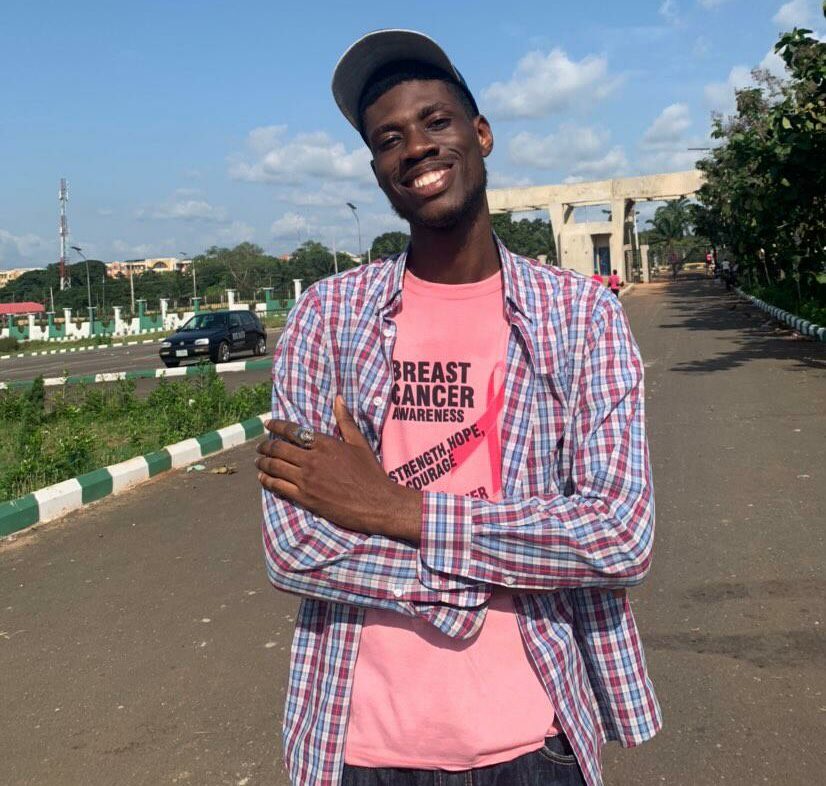
*Photo by Renjum Baker from Unsplash